A puppy arrives with no idea what your rules are. Sixteen weeks later, most of the habits are already set — which is why so many owners look back and wish they had started the small things sooner. You do not need long sessions or a complicated plan. A few minutes, several times a day, aimed at whatever suits your puppy's age, is enough. Here is what to work on, week by week, from the day they come home.
Weeks 1–2: Routine, Toilet Training and Sleep
Most puppies come home at around eight weeks old, so the first fortnight is really about settling in. Your puppy has just left their mother and littermates, and everything in your house is new: the stairs, the washing machine, the laminate floor. Keep visitors calm and handling gentle, and start as you mean to continue. No games on the sofa if the sofa will be out of bounds in six months.
The toilet routine
A young puppy's bladder is small. While they are awake they will usually need the garden every 45 to 60 minutes, plus straight after waking, eating, drinking and playing.
- Take them to the same quiet spot in the garden, on a lead if the garden is exciting.
- Wait. Stand still, say nothing, and give them up to five minutes.
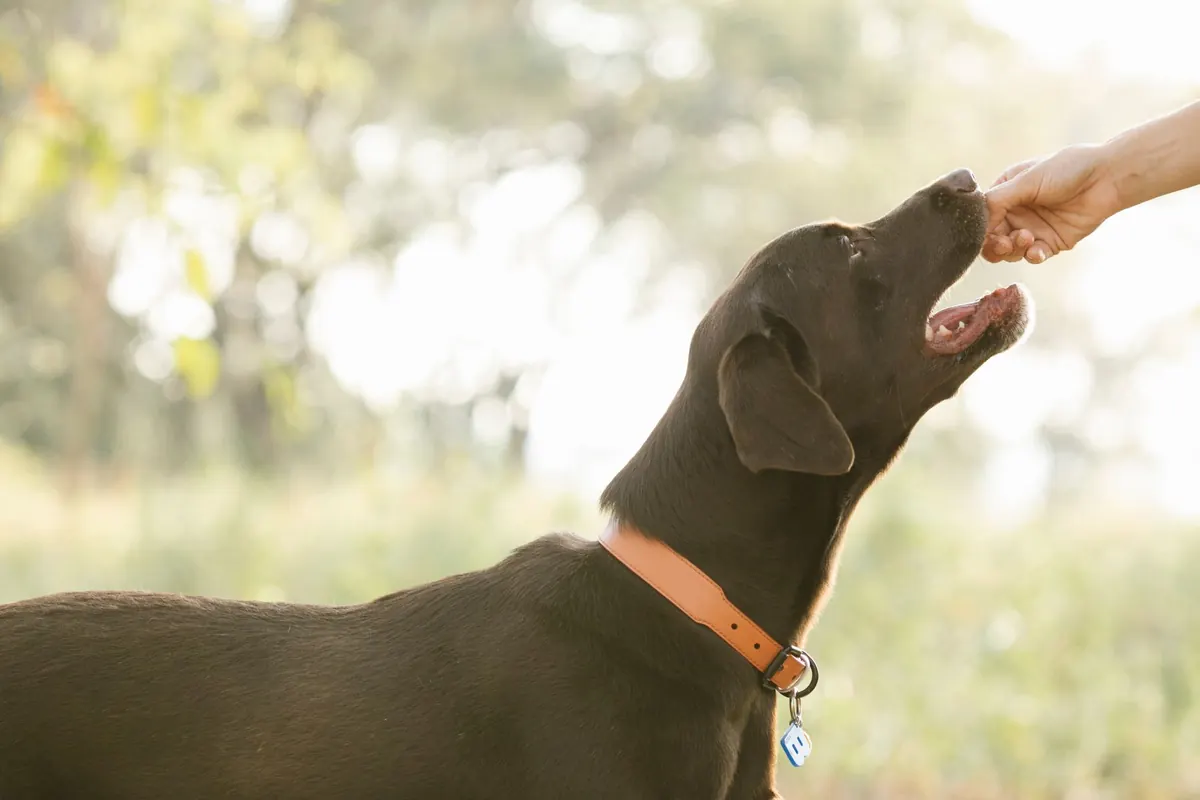
- The moment they finish, mark it with a cheerful "good" and reward within a couple of seconds with something they can swallow quickly.
- Bring them in and supervise. Eyes on the puppy, or they go in a pen or crate.
- If you catch an accident mid-flow, make a light distracting noise and carry them outside. Clean with an enzyme cleaner so the spot stops smelling like a toilet.
Never punish an accident you find afterwards. A puppy cannot link a telling-off to something that happened two minutes ago, and it only teaches them to hide. Expect one or two night-time trips; keep the lights low, take them out, reward, and go straight back to bed.
Weeks 3–4: Name Recognition and First Cues
By now your puppy should be following you about and choosing to be near you. This is the perfect time to make their name mean something good. Say it once; when they turn their head, reward. Ten repetitions, three times a day, in different rooms. Do not use their name to tell them off — you want it to predict nice things, not trouble.
Once the name reliably gets a head turn, layer in the basics:
- Sit: lure with a treat over their nose, then fade the lure and keep the word and hand signal.
- Come: indoors, over a short distance, with a generous reward. Say it once and never chase them for it.
- Handling: touch a paw, lift an ear, glance at their teeth, then treat. Two seconds is plenty at this age.
Keep sessions to two or three minutes. A puppy's attention runs out fast, and stopping while they still want more is how you build a dog that is keen to train.
Weeks 5–8: Socialisation in Full Swing
This is the biggest window of the whole plan. Puppies are most open to new experiences in roughly their first three to sixteen weeks, and unfamiliar things take far more work later on. Use the time now.
- Surfaces: grass, gravel, tiles, wooden floors, a wobble board, a shallow puddle.
- Sounds: the hoover, the doorbell, thunder recordings, motorbikes, children shouting — start quiet and build up.
- People: tall men, people in hats, glasses, beards, someone with a walking stick or a wheelchair, someone carrying an umbrella.
- Traffic: stand well back from a road and watch cars pass while feeding treats.
- Other dogs: calm, friendly, vaccinated adults — always ask the owner first.
- Grooming and kit: harness on and off, paws wiped, nails touched, a quick brush.
- The car: short trips to somewhere pleasant, not only to the vet.
Two rules matter more than the list. First, one new thing at a time, and stay far enough away that your puppy will still eat. If they refuse food, they are too close or too overwhelmed. Second, leave while it is still going well. A happy five-minute experience beats a long one that ends with a frightened puppy.
Ask your vet when it is safe for your puppy to walk on public ground and meet unknown dogs where you live. Until then, carry them or use a sling, so they can still see and hear the world without touching it.
Weeks 9–12: Recall and Lead Manners
Recall is the skill that keeps your dog out of the road and out of trouble, so build it before adolescence arrives.
- Choose a word or sound — a whistle, "pup pup pup", or their name plus "come" — and back it up with food every single time for the first year.
- Practise indoors, then in a secure garden, then on a long line in a park.
- Play two-person recalls: take turns calling, and both of you reward the puppy for arriving.
- Try hide and seek around the house. Puppies love it, and it teaches them to check in on you.
- Never call your dog to tell them off, and never call them only at the end of a walk.
For lead work, start indoors with the lead clipped on for thirty seconds of treats, then take it off. In the garden, reward the position you want: lead loose, puppy beside or slightly behind you, treat delivered by your leg. When they pull, stop and wait. The instant they look back or step towards you, walk on. A few steps of loose lead earns a minute of sniffing. Sniffing is not failure — it is the reward.
If walking on a collar is proving miserable, try a well-fitted harness and get advice from a trainer or your vet. Avoid anything that tightens around the neck.
Weeks 13–16: Proofing and the Real World
At four months old, your puppy knows the words but not yet in difficult places. Add distance, duration and distraction one at a time rather than all at once. Practise recall with a friend walking past, with a ball on the ground, and on a sniff-heavy patch of grass. Ask for a sit at every kerb before you cross, every time, so it becomes automatic. Teach "leave it" by dropping a piece of food, saying the word once, and paying with something better.
Take a mat to a café and reward lying quietly on it for five minutes, then leave before your puppy gets bored. Expect the first wobble of adolescence around this age: some days they will behave as though they have never heard the word "sit". That is normal, and it is not a reason to change the plan.
Making It Stick
Five to ten minutes of training a day, split into three or four short sessions, beats an hour once a week. If a week goes badly, go back a step and make it easier; confidence comes back faster than you think. A good puppy class at this stage is worth the money, both for the training and for the chance to practise around other dogs.
Finally, if your puppy shows fear, freezing or growling that worries you, speak to your vet, who can refer you to a qualified behaviourist. Training advice is general — for anything about your dog's health or behaviour, your vet knows your puppy and this article does not.
Photo: Blue Bird / Pexels