8 Common Dog Training Mistakes New Owners Make (and How to Fix Them)
Getting a dog is the easy part. Teaching that same dog to hold a sit while the doorbell rings, or to walk past another dog without lunging, takes weeks of small, unglamorous repetitions — and most new owners start out certain they already know how.
The mistakes below come up again and again, and nearly all of them start from the same place: wanting to be kind, quick, or both. None are hard to fix once you can see them.
1. Repeating the cue until it means nothing
"Sit. Sit. Sit… SIT." Every owner has done it. But a cue only carries meaning if it reliably predicts something. When you repeat a word four times and the dog sits on the fourth, you've taught them the first three are background noise — and taught yourself to keep talking. Worse, you've taught the dog that "sit" is a word that sometimes floats around for a while before anything happens.
The fix: say it once, then wait three to five seconds. That pause feels uncomfortably long, so sit with it. If nothing happens, don't repeat — make it easier. Move closer, cut a distraction, or lure the behaviour and pay anyway. If you've repeated yourself twice, the setup is wrong, not the dog.
One cue, one consequence. If the dog doesn't respond, change the environment before you change the volume.
2. Punishing a growl
A growl is information: a dog saying "I'm uncomfortable and I'd like this to stop". That's far better than a dog who skips the warning and bites. Scold a dog for growling and you may remove the growl while leaving the discomfort in place — a dog who still hates having their bowl touched, with no audible signal before things go wrong. You haven't made the dog safer; you've made them quieter.
The fix: treat a growl as a stop sign, not a challenge. Note the trigger — food, a toy, a stranger, being handled — and change the situation so the dog isn't pushed that far. Add distance, give space, stop reaching over the bowl. If growling is frequent, or aimed at people or other dogs, bring in a qualified trainer or veterinary behaviourist. That's a safety question rather than a training one.
3. Rewarding at the wrong moment
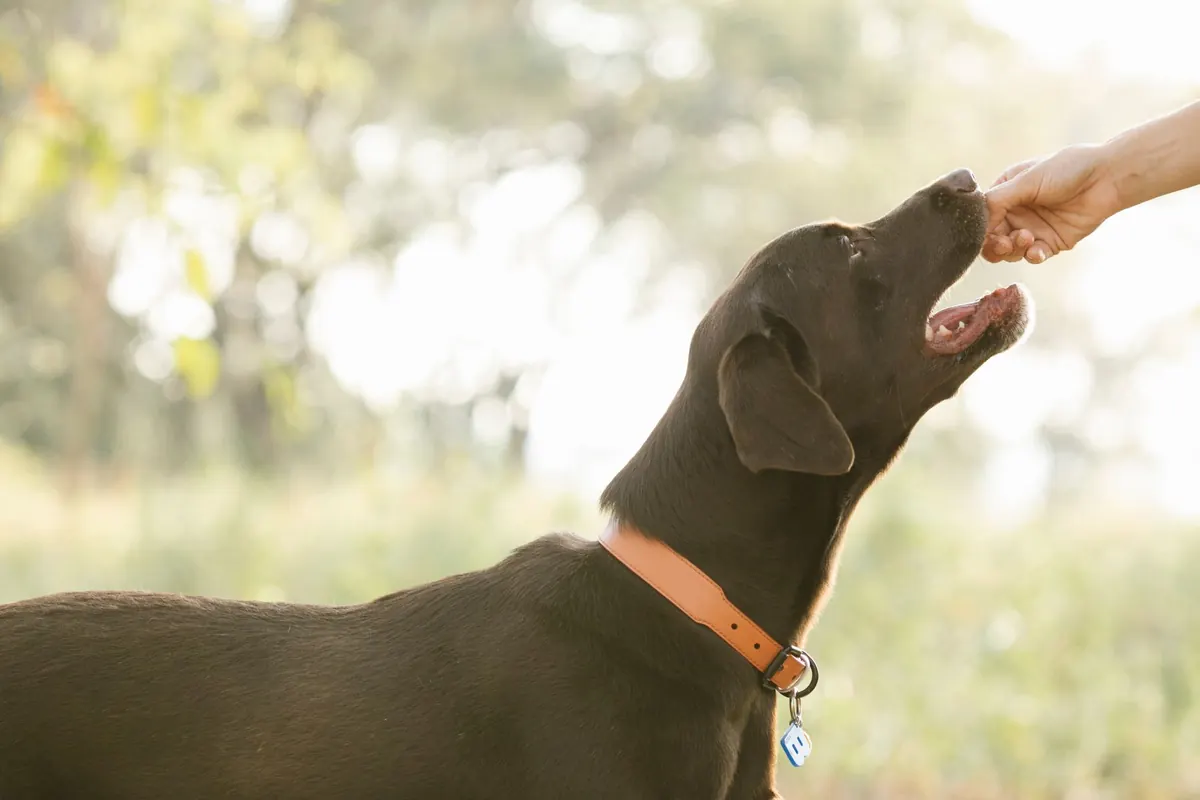
Dogs learn from consequences that arrive within a second or two. Sit, rummage in a pocket, find a biscuit, hand it over five seconds later — and the reward is likely to land on whatever happened in between, such as standing up again. A dog who sits, stands, then gets a treat has just been paid for standing.
The fix: choose a marker word such as "yes", or a click, and use it the instant the dog gets it right. The marker buys you those few seconds. Keep treats small and mix food with life rewards: a ball throw, a sniff break, being let through the door. Then check what you're actually paying for. If the dog barks and then sits, and you treat, you may be rewarding the barking.
4. Using food as a bribe instead of a reward
Holding a treat over your dog's nose and saying "sit" teaches them to follow your hand. That works beautifully until your hand is empty. It can also become a negotiation: the dog waits to see the food before deciding whether the cue is worth doing.
The fix: lure once or twice to show the position, then hide the food, ask for the behaviour and pay from your pocket. Fade the lure into a small hand signal within a few sessions. If the dog only performs when they can see the treat, you're earlier in the process than you think.
5. Long sessions, spaced far apart
An hour on Sunday with nothing in between doesn't build a habit. Dogs learn best in short, frequent, cheerful bursts. A puppy's attention span is measured in minutes, and an older dog who is new to training is no different.
The fix: three to five minutes, two or three times a day, is plenty for a puppy or a beginner dog. Stop while things are still going well, not when you're both tired and irritated. Much of the best training happens around daily life — a sit before dinner, a wait at the front door, a recall in the garden — and it counts just as much as a formal session.
6. Everyone in the house teaching something different
"Down" means lie down to one person and get off the sofa to another. One of you allows jumping up; someone else pushes the dog away. To the dog, that isn't training, it's guesswork. Inconsistent rules don't just slow progress; they can make a dog look stubborn when they're actually just reading the room.
The fix: agree the basics, and stick to them. Write down the cues you'll use, what they mean, and what happens when the dog gets it right. Put the list on the fridge if you have to. Decide together whether the dog is allowed on the sofa, whether jumping up is ever okay, and who feeds, walks, and trains. If a rule changes, change it for everyone at the same time.
7. Poisoning the recall
Calling your dog only when something unpleasant is about to happen — bath time, nail clipping, the end of the dog park, being put in the crate — teaches them that "come" predicts bad news. Soon they'll slow down, look away, or vanish entirely.
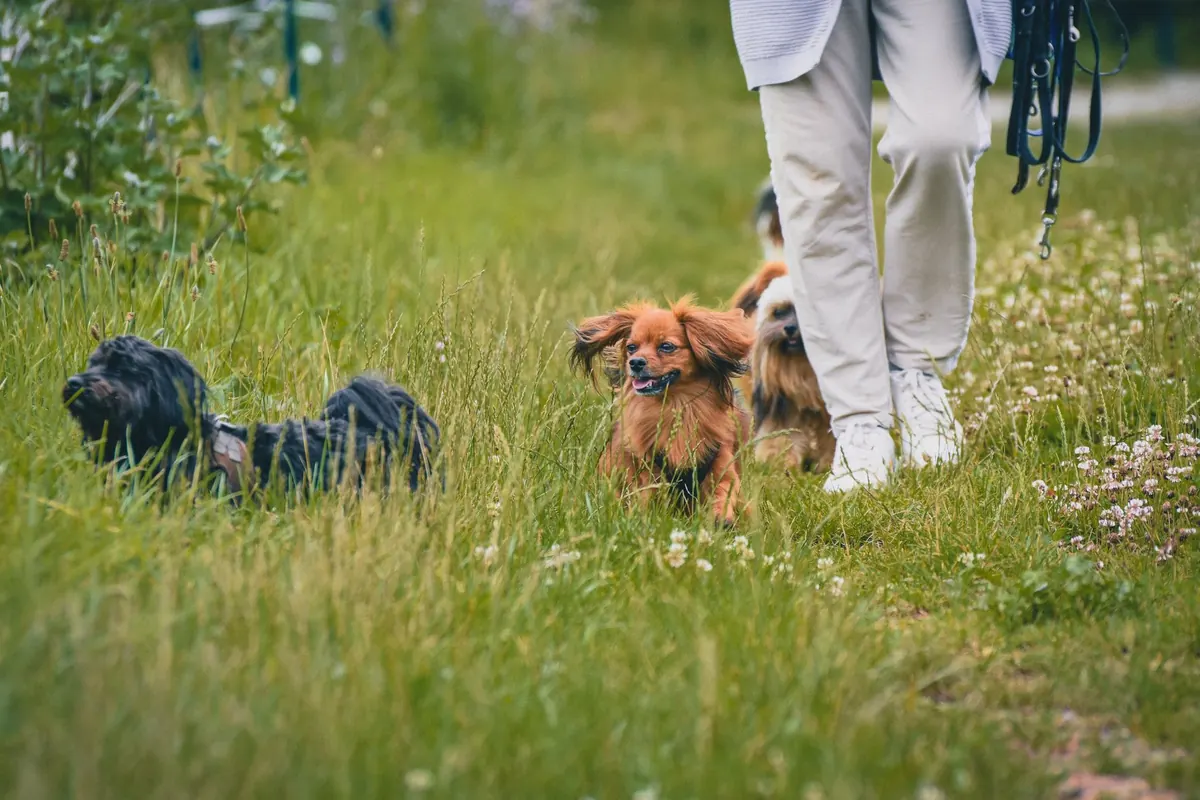
The fix: make recall the best-paying cue in your dog's vocabulary. Call them often for easy, happy things: a treat, a toy, a walk, a scratch behind the ears. Then let them go back to what they were doing. Practice on a long line in safe places, reward every single time at first, and never punish a dog who finally comes to you, even if they took their time. The dog who arrives after a five-minute chase still needs to be paid for arriving.
8. Expecting the dog to generalise too soon
A dog who sits perfectly in the kitchen may have no idea that "sit" also means sit on the pavement, in the vet's car park, or while another dog walks past. Dogs don't automatically generalise. They learn the picture, not the concept, until you practise in many different pictures.
The fix: train each behaviour in easy, medium, and hard locations. Start where your dog can succeed, then add one distraction at a time: a different room, the garden, the front step, a quiet park, a busy street. If they fail, you've made it too hard — go back one step and build again. This is also where most owners discover that "he knows it at home" really means "he knows it in the kitchen with nothing else happening."
An extra useful section: the five-minute daily routine
You don't need a formal training plan to make progress. Pick three things you want to improve and attach them to moments that already happen every day.
- Before meals: one sit and a short wait while the bowl is set down.
- Before the front door opens: one wait, then release.
- On a walk: three easy recalls on a long line, each paid generously.
- In the evening: two minutes of loose-leash practice in the hallway or garden.
That's roughly five minutes total, but it's five minutes every day, in real contexts. Consistency beats intensity almost every time.
An extra useful section: when to get help
Some problems are too serious for a website article. If your dog has bitten, snaps, guards food or toys, freezes when handled, or growls at family members, stop training and get professional eyes on it. Look for a trainer who uses force-free, reward-based methods and who is comfortable referring you to a veterinary behaviourist when there may be a medical or anxiety component. There's no shame in asking for help. The shame is in waiting until a warning becomes a bite.
Most training mistakes are not moral failures. They're timing errors, consistency errors, or setups that asked too much too soon. Fix the setup, pay the behaviour you want, and give it a few weeks of boring, repetitive, cheerful practice. That's how the dog at the doorbell turns into the dog who holds a sit while the whole house is coming apart.
Photo: Alexas Fotos / Pexels