A long-haired cat looks after itself. Sort of. A Persian, Maine Coon or Ragdoll will happily spend an hour washing its face, but the coat along its back, belly and hindquarters is another matter. Shed undercoat wraps around the live hair, tightens against the skin, and by the time you spot a lump behind an ear it can be welded solid. A mat that small is easy. A mat the size of your palm is a job for someone with clippers and a steady hand.
The answer is dull but reliable: short sessions every few days instead of one long battle every few months. Ten steps, roughly fifteen minutes a week, plus a few minutes of spot checks in between. Here is the routine.
Before You Begin: Tools and Timing
Pick a moment when the cat is fed and sleepy rather than mid-zoom. A quiet room, the door shut, no other animals, and a towel on the floor beats chasing a cat around the living room. Have everything within reach so you are not standing up mid-session.
- A metal comb with wide teeth on one side and narrow on the other. This is your main tool, not the brush.
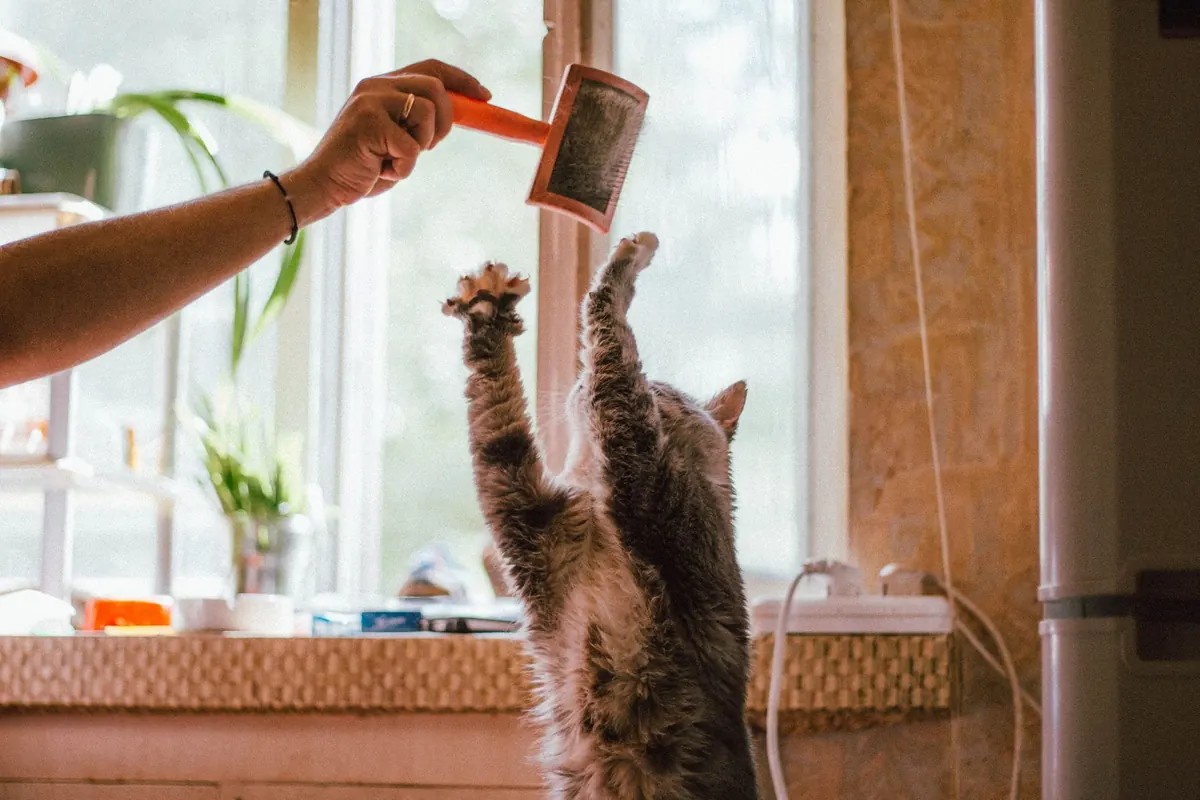
- A slicker brush for the surface coat and loose hair on the back.
- An undercoat rake, used lightly and never on the legs, tail or belly.
- Blunt-nosed nail clippers made for cats, plus styptic powder in case you catch a quick.
- Cat-safe ear cleaner and cotton pads, not buds.
- Dampened gauze or a soft cloth for eyes.
- Treats, within arm's reach, given during the session rather than only at the end.
Two things to leave in the drawer: human hairbrushes, which scratch the skin and miss the undercoat, and scissors. Never cut a mat out with scissors. Cat skin is thin and loose, and it is far too easy to slice it.
The Ten-Step Checklist
- Settle the cat somewhere comfortable and let it sniff the comb.
- Run your hands over the whole body and feel for knots before you brush anything.
- Comb the back and sides, working in the direction the fur lies.
- Brush the belly, armpits and the inside of the back legs.
- Comb the tail and the thick "trousers" on the hindquarters.
- Check the ruff and behind the ears.
- Look at all four sets of nails; trim only the clear tips.
- Check the ears, then wipe with cat-safe cleaner.
- Wipe the eyes with damp gauze if there is any discharge.
- Reward, then note anything you want to keep an eye on.
Brushing: The Part That Prevents Everything Else
Most coat problems start with brushing that only covers the easy areas. The back is straightforward. The armpits, belly, groin and behind the back legs are where mats form first, because the hair is finer and the cat cannot reach it properly with its tongue.
Work in small sections
Comb a patch, then move on. Do not drag the comb through a tangle from above; start a few centimetres below the knot and work upwards in short strokes. If the comb snags, hold the hair between the knot and the skin with your free hand so the pull does not reach the skin.
Comb, then brush
The comb finds what the brush skims over. Use the wide teeth first on longer coats, then the narrow side once the coat is clear. Follow with a few strokes of the slicker brush to lift loose hair and add a bit of shine.
Go gently in the sensitive spots
The belly, tail base and hind legs are ticklish, and many cats will complain. Short strokes, plenty of pauses, and treats work better than holding the cat still. If your cat suddenly objects to a spot it used to tolerate, that is worth mentioning to your vet rather than pushing through.
Mats: Catch Them While They're Loose
A loose mat the size of a pea can be worked out with your fingers and a comb over a couple of sessions. Anything tighter needs a plan:
- Do not bathe or soak a mat. Water tightens many mats rather than loosening them.
- Do not pull it apart. You will hurt the cat and it will remember.
- If the mat is sitting against the skin with no give, stop. That is a groomer's job, and sometimes the coat has to be clipped.
- If the skin under a mat looks red, scabby or damp, see a vet. Skin trapped under a mat can become infected.
Daily combing through shedding season, and every other day the rest of the year, is what keeps mats from forming in the first place. Senior cats, overweight cats and cats with arthritis often stop grooming their rear half altogether, and that is a coat-care issue as well as a health one.
Nails, Ears and Eyes
Nails
Press the pad gently so the claw extends and look for the pink core, the quick. On clear nails you can see it easily. Trim a tiny amount at a time, well in front of it. On dark nails, take off only the very tip and stop if you see a grey or pink dot in the centre. If you are unsure, ask your vet or a groomer to show you once. Cats that no longer use a scratching post, or older cats, often need nails checked more often because the claws can curl into the pad.
Ears
Healthy ears are pale, dry and mostly odourless. Wipe the visible folds with cleaner on a cotton pad. Never push a bud down the canal. A smell, dark discharge, redness, swelling or constant head shaking is a vet visit, not a grooming problem. Long-haired cats often grow tufts inside the ear opening that trap wax, so check weekly.
Eyes
A little sleep in the corners, especially in flat-faced breeds, is normal. Wipe from the inner corner outwards with damp gauze, using a fresh piece for each eye. Cloudiness, squinting, redness, swelling or thick discharge needs a vet promptly. Do not use human eye drops on a cat.
When to Stop and Call a Groomer
Grooming should be boring. The moment it turns into a wrestling match, stop, give the cat a break and pick it up tomorrow. Some clear signals that today's session is over:
- Hissing, growling, flattened ears, or a tail thrashing hard.
- The cat hides from you afterwards, or avoids the room where you groom.
- You find a tight mat you cannot work loose with fingers and a comb.
- Skin under the coat is red, broken, scabby, or you find a lump or wound.
- The ears smell or look dirty, or the eyes are discharging.
Call a professional groomer if your cat has a dense double coat, is difficult to handle, or has mats that have tightened against the skin. A groomer can clip safely and often finishes in less time than a home session, which is kinder for a stressed cat. If you notice pain, swelling, bleeding, a bad smell or a change in behaviour, speak to your vet first. Grooming and veterinary care overlap more than most owners expect.
Making It Stick
Two or three short sessions a week beats one hour on a Sunday. Do the quick version on busy days: hands over the body, comb the back, check the nails, look at the ears. Keep the comb and treats in one place so you can start without a search. If your cat will only tolerate two minutes, then two minutes it is, twice a day, until that becomes four. Book a professional groom every six to eight weeks if the coat is heavy, and let them handle the parts your cat refuses to let you near. A cat that is brushed little and often stays mat-free, comfortable and far more willing to be handled when it matters.
Photo: Yuliya kota / Pexels